







Active attacker training from the perspective of a security studies student
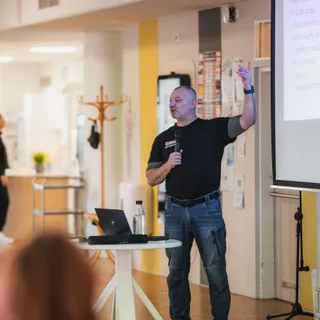
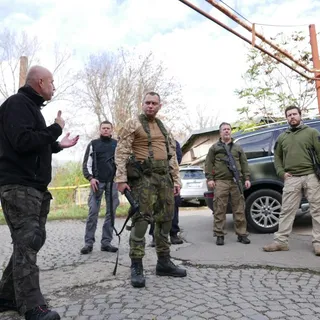
Shooting, shouting and fighting, but also a lot of information, model situations and trying to prepare people for moments in which seconds can make the difference. That's exactly what it looked like training against an active attacker in the Benešov home for the elderly. On Thursday, June 18, I went here together with the chief instructor Lumír Němec, a former commander of the special operations group of the URNA intervention unit and SOG special units, who also has experience in foreign missions in Kosovo, Iraq and Afghanistan.
The first shots and the first reaction
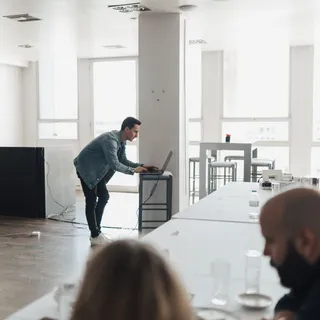
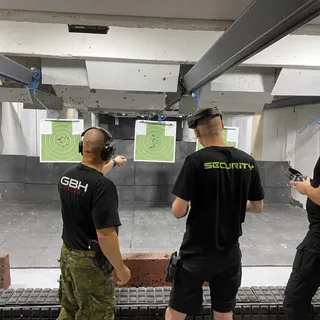
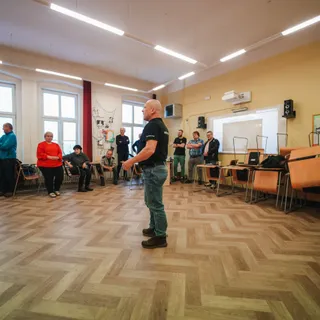
The training started sharply, just after 10 minutes shots were heard. Lumír Němec wanted to show people who have never dealt with firearms how uncomfortable a close shot can be. Based on the initial trial, individuals could decide whether they would prefer to move to the next room for the next shot. Although it wasn't a real weapon, just the sound of the shot alone can really scare you. I've been around guns in the past, I even have shooting experience, but I certainly didn't stay calm the first shot. I filmed the entire event at the same time, and the footage from this moment is somewhat shaky. So I'm not surprised that some female employees preferred to leave before more shots were fired.
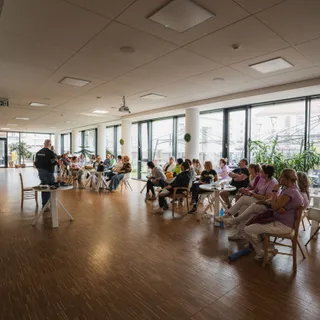
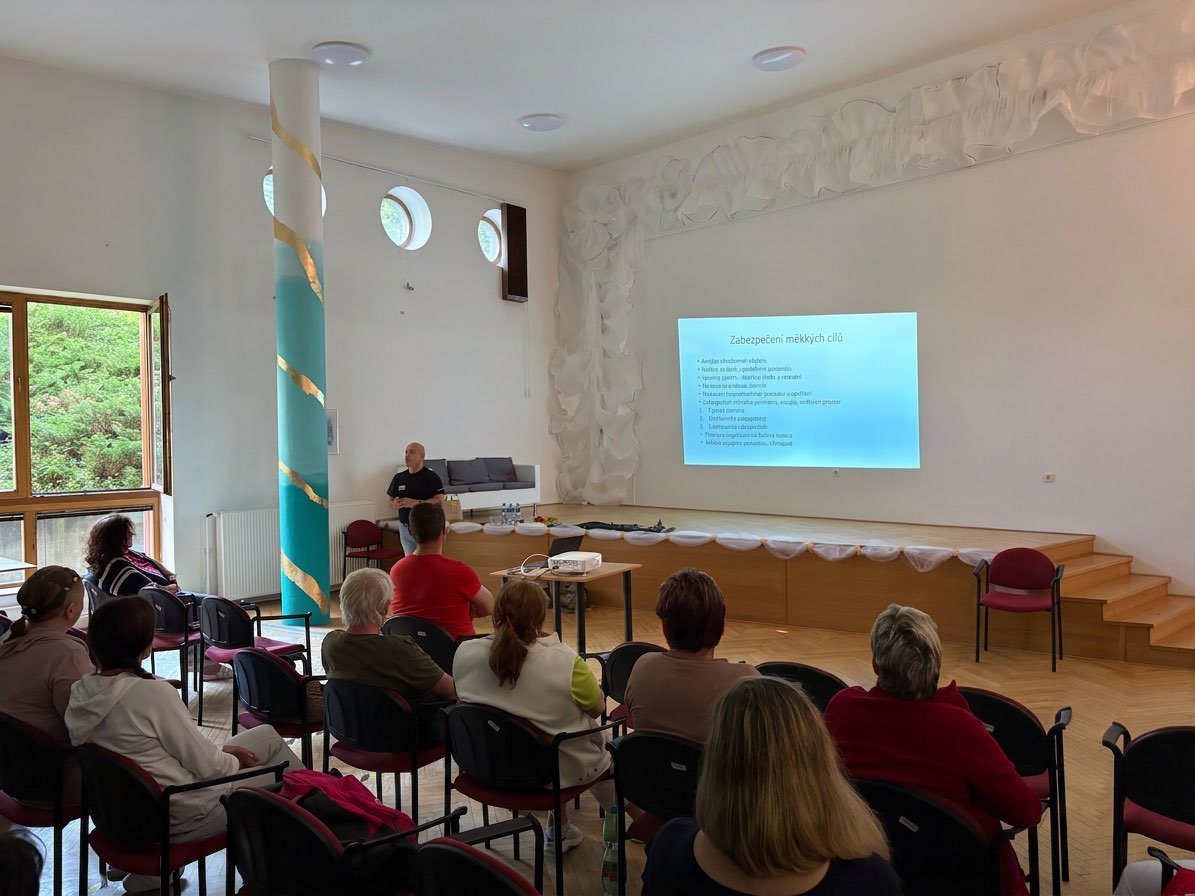
This was followed by the theoretical part divided into several blocks. In the first hour, the training focused on the most important principles of securing soft targets. When Lumir asked the participants what they considered to be the most important security measures, most of the answers were directed towards technical security. However, he reminded that the fundamental role is not played by technology, but above all by the readiness and training of the staff.
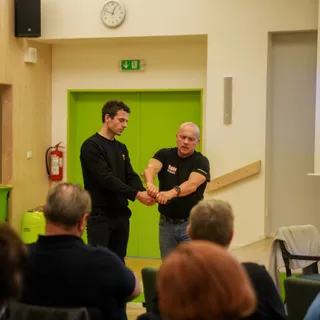
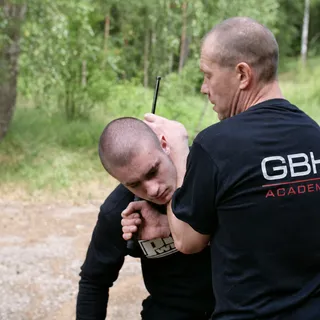
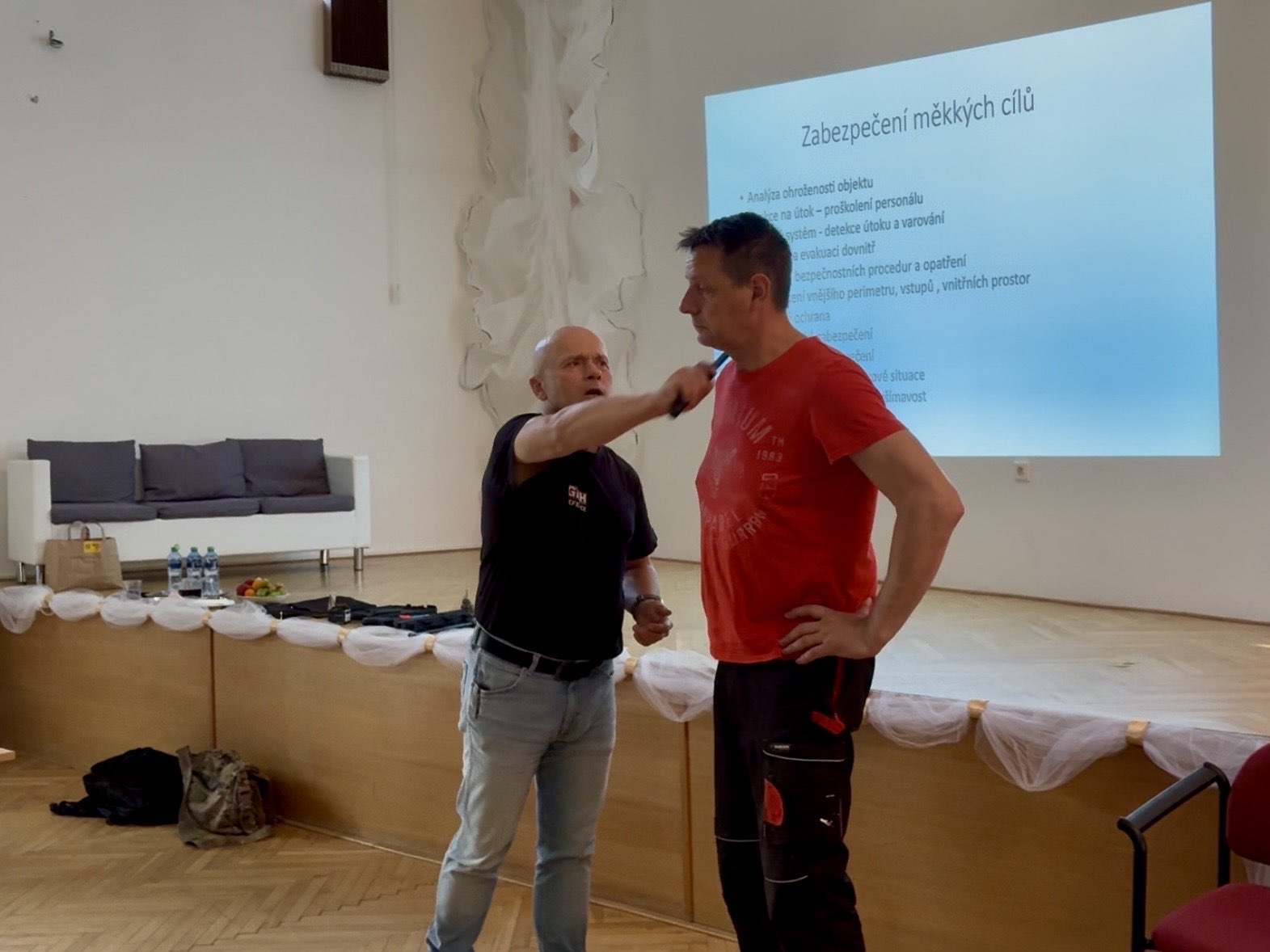
It didn't take long and Lumir had already chosen his first "victim". On one of the employees, he demonstrated how even armed security might not be enough against a prepared attacker. A moment of inattention or clever distraction and you have a knife at your throat. In this case, rubber, so the gentleman could safely return to his seat.
How the attacker behaves and what goes on in people's heads
The course continued with a description of the phases of the attack, i.e. how the attacker proceeds during such an act. From choosing and observing the target to the actual execution of the plan. The entire course was supplemented with examples of real incidents. The staff at the home watched several videos from the United States, New Zealand and other countries. It was mostly footage from industrial cameras showing how people behave in the event of an active shooter or other attacker. It seems that at such moments they instinctively form groups and move to corners where they feel safer, paradoxically making themselves an easier target.
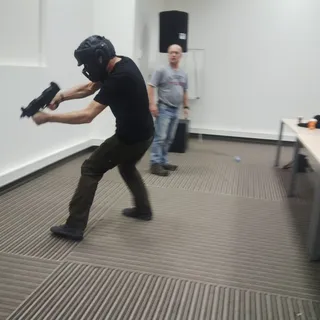
Another surprise came after the break. Colleague Jiří entered the room through the side entrance, who was supposed to simulate an active shooter attack. Although I knew that this would happen in the next few minutes, Jiří was so quick with his shooting that I didn't even have time to film the situation properly. So I can only imagine what I would be able to do and not be able to do in the event of a real attack.
This was followed by an analysis of active shooter situations from recent years. We spent the most time on the shooting case at the Faculty of Arts of Charles University. It is not pleasant to look back on this tragic event, but for lessons for the future it is important to understand how the attacker thought, how he prepared, where the Police of the Czech Republic went wrong and whether the people on the spot could have been better prepared. Although I had heard about the attack on the FF UK countless times at school and in the media, Lumir brought a number of insights that were new to me.
However, the description of people's behavior during the attack on the faculty was essential in the training. "He entered the classroom with a gun. At first, the students thought it was a recession, they laughed. The moment he shot the teacher, they knew it wasn't a joke. Then they started doing exactly what people do in that situation - hide under desks, under chairs and in corners. But that's exactly what the attacker expects. He killed and injured the most people in this room." Lumir described the beginning of the attack in Prague. With this comment, he wanted to indicate that if a person is in close proximity to an attacker, passivity will most likely not save him.
Run, hide and fight
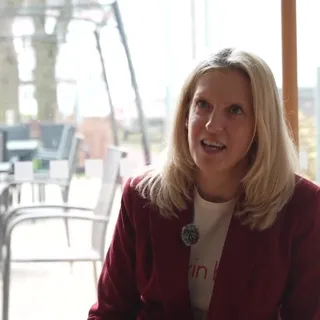
After lunch we moved to the basic premise run, hide and fight. Lumír se snažil vysvětlit, že na útěk je důležité být připraven. Některým zaměstnankyním domova zprvu přišlo absurdní, že by se v každém obchodním domě měly rozhlížet po tom, kudy by mohly utéct, ale po čase pochopily, že například únikové východy stačí registrovat podvědomě, zkrátka vnímat prostředí, ve kterém se nachází. „I sure do opened his eyes in that is good to look around, not to be focused only on oneself, when I go somewhere outside, but looking around.I would say that I will have more eyes nowe on the stopwatch ai will about something more alert for exampleto check escape exity and in case of danger to think about a possible escape plan,“ Denisa Rejchrt, head of the social department, confided in me after the training.
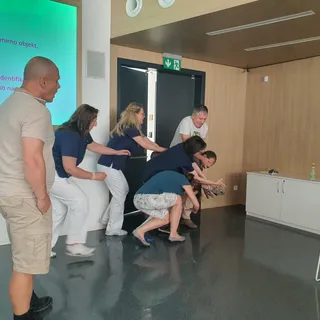
Within a step Take cover Lumir showed the staff how they can block the entrance to the room, and vice versa, what not to do in the case of an active shooter - for example, do not stand directly behind the door, which will not simply stop the projectile. This part of the presentation was also accompanied by example videos. But Lumir also came with his own tips. Just remove the belt, wrap it around the handle, step away from the door and hold the belt firmly. It may seem a little risky, but an attacker who aims to kill as many people as possible can be quickly deterred by a more difficult-to-access door.
The staff of the home could directly experience the fight with the attacker. Even before that, however, Lumir showed the participants various weapons and means that can be used for defense in a crisis situation, and at the same time explained how to react if an attacker uses them against them. A pistol, a grenade, a knife, a baton, pepper spray, a kubotan - it was all in place, and Lumir gradually showed the participants how to deal with or against these means. I was also included among the extras. First, Lumir showed me how to defend myself against an attacker with a knife. At that moment, the chair standing nearby appeared to be the most practical object, which Lumir grabbed and ran towards me with a scream. It is shouting and determination that can play an important role in deterring an aggressor, because he usually does not expect someone to stand up to him.
Before long, I also got a dummy pistol in my hand, but it didn't last long and after a simple grab, it turned against me. After that, Lumir pointed at me several more times. At the end, he grabbed my ankles from behind and said that a seizure would follow headtuum in annum. Co to znamená a jak to mohlo vypadat, si čtenář může domyslet sám.
Defense in practice
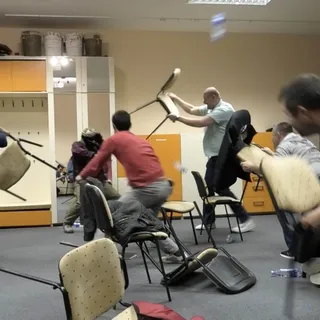
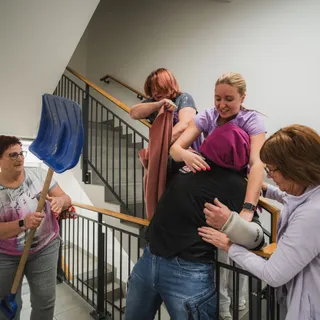
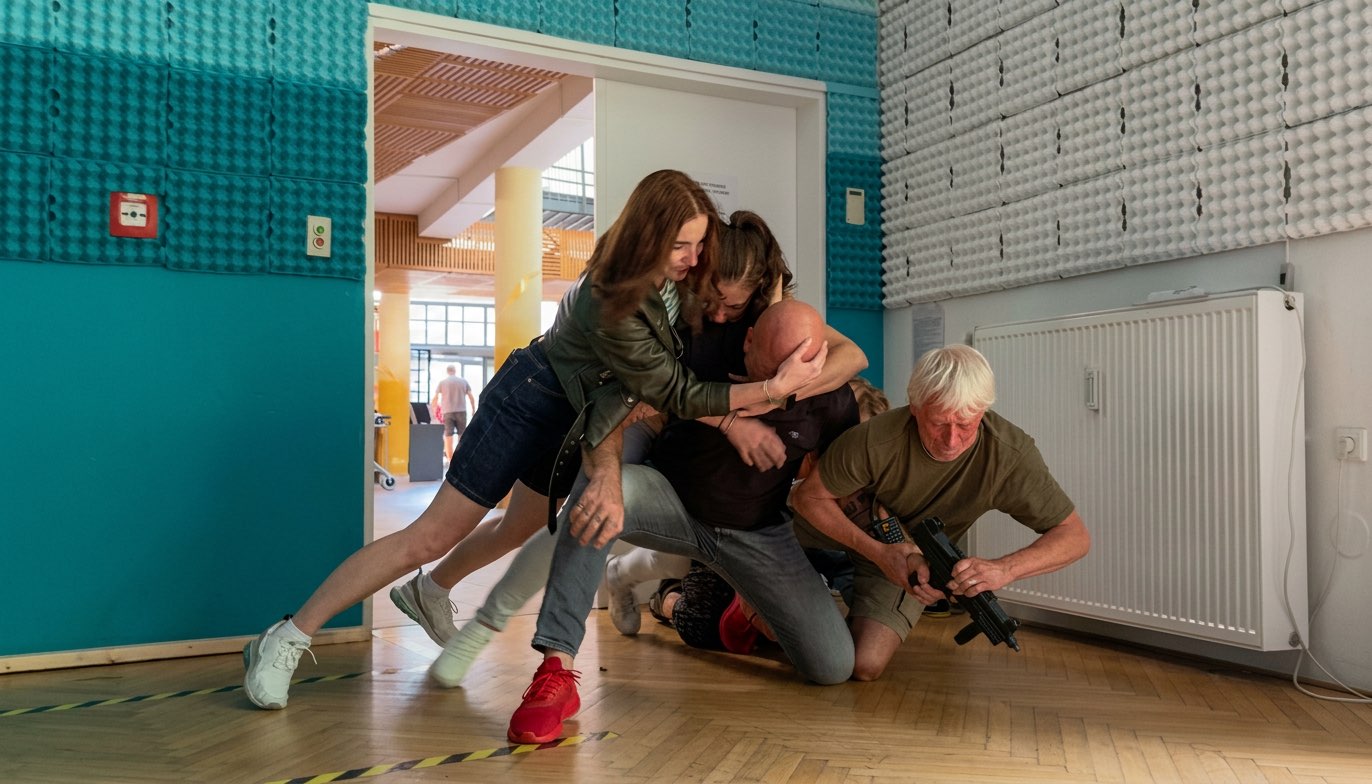
In the final exercise, those present tested how they would be able to defend themselves against an attacker who reaches the room. In several model situations, colleague Jiří ran into the space with a knife, firearm or grenade. Groups of six were supposed to react in such a way as to stop the attacker as quickly as possible. In a situation where you have nowhere to run, it is important to act quickly and together. An attacker can easily be intimidated by several times the odds, or simply may not be enough for her. This was also shown during the exercise, when a group consisting mainly of women knocked an attacker weighing more than 100 kilos to the ground in an instant.
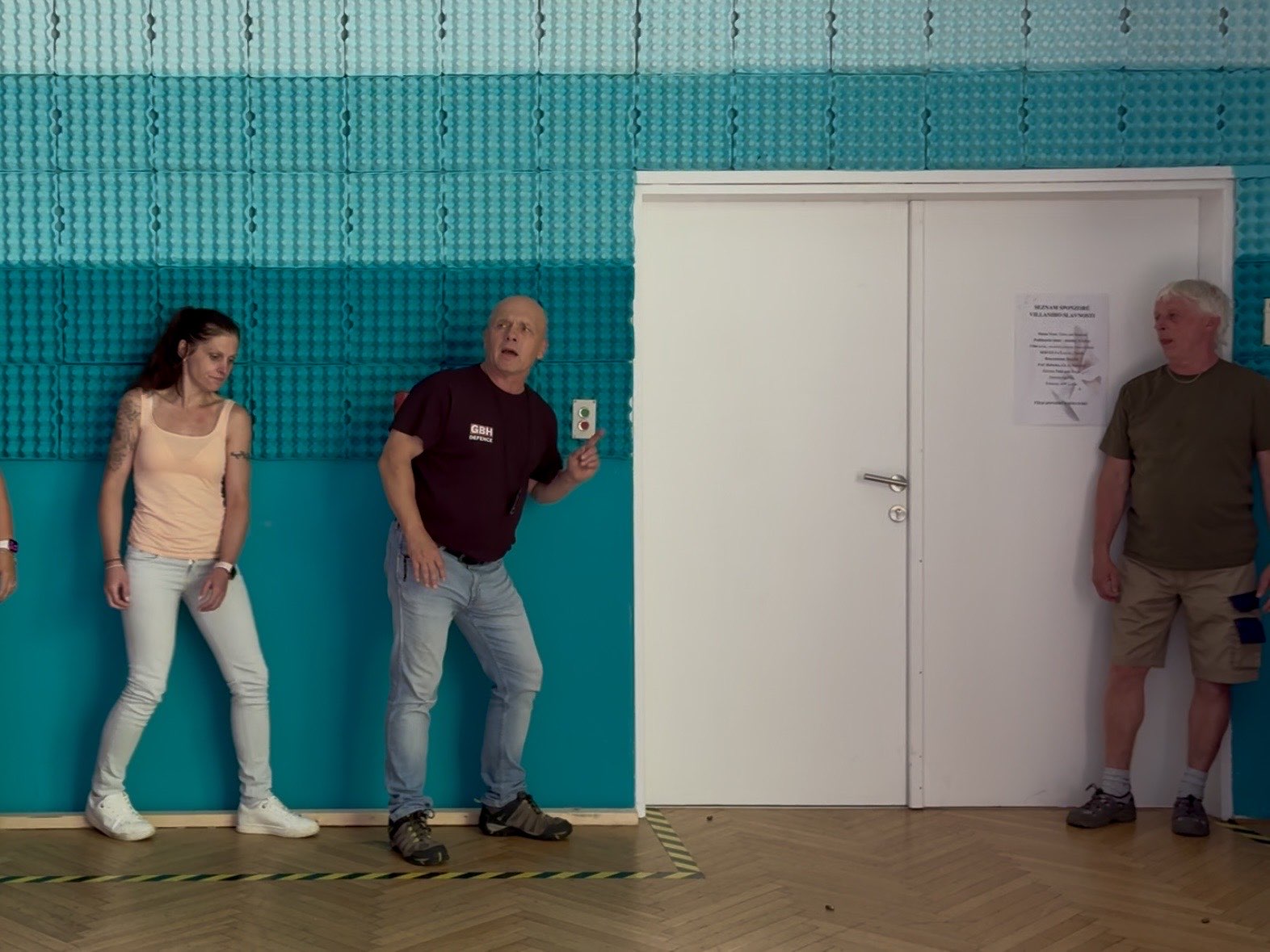
During the practice session, it was evident that the participants listened well during the lecture. Above all, one gentleman responded really quickly. He immediately rushed for the weapon, which the aggressor could not handle properly. Another lady went after the attacker's eyes quite purposefully. In the model situation, she only covered them for him, in the case of a real attack, the most important sensory organ can be attacked even more aggressively, in any case, even the covering itself can be more than unpleasant.
After several hours of training at the Benešov home for the elderly, I left with the realization that the greatest value of the entire day was not individual techniques, but a change in thinking. How quickly the situation can turn upside down, how easily one hesitates in the first seconds and how essential it is to have at least a basic idea of what to do when chaos comes. In crisis situations, it is often not strength or courage that matters, but the ability to keep a cool head and start acting in the first place.
Are you interested in training?
Send us an inquiry — we'll get back with a tailor-made date and program proposal.
- Dlouhá 730/35, 110 00 Prague 1
- info@gbhdefence.com
- +420 252 548 480